
Whether you're an avid collector or simply want a serving piece or two to enhance your holiday table, there's no denying the exquisite beauty of antique flatware patterns. During the 19th and early 20th centuries, manufacturers turned out thousands of gorgeous designs. From sterling to silverplate, Art Nouveau to mid-century modern design, bargains to priceless treasures, there's at least one pattern out there that's perfect for you.
Where to Buy Antique Flatware
If you're shopping for antique flatware, you'll have several options. Locally, you can find these lovely old patterns in antique shops, at flea markets, and even at garage and estate sales. However, for the best selection, especially of sterling flatware, you'll need to shop online. Try one of the following sites:
- Antique Cupboard - Although they specialize in and have a giant selection of sterling flatware, Antique Cupboard also has a good selection of silverplate. This Wisconsin-based company has been in business for more than 40 years and is one of the most reliable places to buy antique flatware online.
- eBay - eBay is one of the best places to find great deals on antique flatware. If you're shopping for sterling, be sure the piece is marked. It's also important to double-check the seller's assertions about the flatware pattern to make sure the piece isn't mislabeled.
- Etsy - In addition to being an artisan marketplace, Etsy sellers have an extensive selection of vintage wares. You can find both sterling and silverplated flatware patterns from almost any era.
- Replacements, Ltd. - With more than 36,000 patterns in stock, Replacements is the place to go if you're looking for a specific or hard-to-find pattern. Although prices tend to be higher than some other sites, you can be certain the piece you buy is in excellent condition.
Antique Sterling Flatware Patterns and Brands

There are few things more beautiful than a piece of antique sterling flatware in excellent condition. Depending on current market conditions, antique sterling flatware can be worth more or less at any given time due to the melt value of the silver metal. Certain patterns that are especially rare and ornate hold their value in any market.
Important sterling flatware manufacturers include Alvin, Reed and Barton, Wallace, Lunt, Towle, International, Unger Bros., Shiebler, Watson, and many others.
Most Popular Siver Patterns for Sterling
While there are hundreds of different patterns of sterling flatware that have been made over the years, a few stand out for their popularity. According to Replacements, Ltd, the following are the the top five sterling patterns that are popular with collectors:
- Wallace Grande Baroque - This ornate pierced pattern was first introduced in 1941 and has been popular ever since. It holds its value well, and you can easily find replacement pieces or expand your set.
- Gorham Chantilly - This simple, flowing Art Nouveau pattern was first introduced in 1895. The soft curving lines look beautiful on modern tables, so it's an ever-popular choice.
- Towle Old Master - An ornate pattern with scrolls and flowers, Old Master was first introduced in 1942. It was an instant classic, skipping over the simple mid-century styles to be popular today.
- International Prelude - This tapered mid-century pattern from 1939 shows that simplicity can be timeless too. This vintage flatware pattern doesn't feel like it belongs to any specific era, so it works with china from any time period.
- Wallace Rose Point - An intricate pierced pattern inspired by bridal veils and introduced in 1934, Rose Point has lots of sparkle that works with ornate china patterns as well as simple modern dinnerware.
Antique Silverplated Flatware Patterns
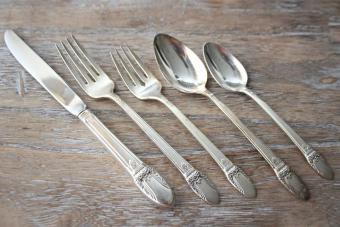
Since the silver content in sterling flatware makes it out of reach for many collectors, there's also a great market for silverplated flatware patterns. Silverplating involves placing a thin layer of the precious metal over an inexpensive base metal. The thickness of the silver layer depends on the quality of the piece.
Popular manufacturers of silverplated flatware include 1847 Rogers Bros., Wm. Rogers, Community Plate, Holmes & Edwards, Oneida,1881 Roger, and others.
Most Popular Vintage Flatware in Silverplate
Silver Queen specializes in silverplated flatware and maintains that the following are some of the most collectible patterns:
- Coronation by Oneida - This modern feeling pattern still has a little fanciness in the form of ornate piercing on the handle.
- First Love by Rogers - Featuring soft curves and a raised floral decoration, this silverplate pattern feels timeless.
- Heritage by 1847 Rogers - A more ornate pattern, this design will steal the show on any table, whether you're pairing it with modern dishes or your grandma's china.
- Morning Star by Community Oneida - With its simple squared-off handle and minimal decorations, this has a mid-century feel that will look at home on a modern table.
- Remembrance by 1847 Rogers - This classic pattern has delicate flowers and a timeless shape that is simple and classic.
How to Identify Your Pattern

Whether you're browsing at an antique shop or estate sale or simply trying to identify your grandmother's silver, it's good to know what to look for. Each piece of silver, especially those made in the 19th and 20th centuries, is marked in some way. Most feature the name or hallmark of the manufacturer, and some also display the silver content, the name of the jeweler who first sold the piece, and the date the pattern was introduced. These markings can help you determine whether you're holding a piece of valuable sterling silver or a beautiful plated item.
Is It Sterling or Silverplate?
Before you can identify the pattern, you'll need to determine whether it is silverplated or sterling silver. In most cases, this is easy.
- Almost all sterling silver is marked with the word "sterling" or the number "925." If the piece is marked with either of these, you can be certain it's crafted of sterling.
- If it's marked "plated," "electro-plated," or another version of this word, you'll know it's silverplate.
- If it's not marked at all, it is likely silverplate. However, there is a slim chance it could be a very early piece of sterling or one crafted by an independent manufacturer.
Understanding Hallmarks
On the back of your silverware, you'll see a series of small marks. You may need a magnifying glass to view these marks in detail. Each sterling and silverplate manufacturer had its own unique silver identification hallmark. You can use these marks to identify your piece. Once you've determined the manufacturer, you can view their patterns to identify the exact piece you have.
The Online Encyclopedia of Silver Marks, Hallmarks, & Maker's Marks is an excellent free resource for identifying the manufacturer of your silver pattern.
Finding Your Pattern
Once you know the silver content and the manufacturer, you can determine the pattern of your piece or set. For sterling flatware, Antique Cupboard has a handy, searchable directory of patterns. Simply select your manufacturer and then compare your piece to the photos shown.
If your piece is silverplate, look it up on the list from Silver Pattern. You'll see hundreds of patterns on this site, and there's a good chance yours will be among them.
Flatware Collecting Tips

If you're starting a collection of a particular antique flatware pattern or a group of patterns, keep the following tips in mind.
Don't Limit Yourself to One Antique Flatware Pattern
There's no need to limit yourself to one pattern. There are so many lovely antique flatware designs out there that many collectors choose to get one piece or place setting from each of their favorites. This kind of mixed set is elegant and unique.
Collect One Type of Silverware
You can collect only one type of item as well. Some collectors choose to focus on sugar shells, sardine forks, sauce ladles, or another serving piece. This is a great way to get a number of beautiful patterns.
Choose a Style You Love
Another popular option is to focus on an era or motif. Some collectors love the ornate floral designs of the Art Nouveau era, while others like the simple, geometric patterns of the Art Deco period. Figural silver patterns, which show people and animals, are another popular area of collecting.
Look for Silver Marks Before Buying
If you collect sterling, be certain that your piece is actually made of sterling silver. It's common to find fakes, and the only way to avoid this is to purchase pieces that are clearly marked.
Remember That Condition Affects Flateware Value
Condition is important for both sterling and silverplate. If you're considering a piece of sterling, make sure the pattern is clear and crisp and not over-polished. If you're collecting silverplate, be sure the piece doesn't have any of the base metal showing through the silver layer.
A Fun and Functional Hobby
From the clean, modern lines of the Art Deco era to the beautiful flowers and figural motifs of the Art Nouveau period, there are thousands of gorgeous antique flatware patterns to choose from. Whether you're just starting your collection or have been buying silver pieces for years, you'll find that silver collecting is a fun and functional hobby. The hardest part about collecting flatware will be choosing which patterns to pursue.


