Native American artifacts offer a glimpse at the long and fascinating history of the people indigenous to the continent. From stone tools to pottery, these artifacts are significant for historians, archeologists, and collectors, as well as for the descendants of the people who made them. Learning to identify Native American artifacts can help you spot these important relics.
Native American Artifact Identification Tips
It takes expert training to unequivocally identify Native American artifacts, but there are some clues that can help you tell a stone arrowhead or other important piece from the surrounding materials. According to Field & Stream, these are some suggestions for identifying artifacts:
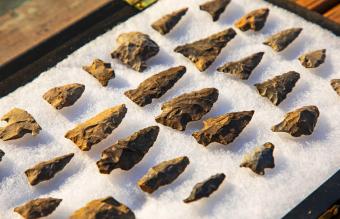
- In arrowheads and spearheads, look for a clear point and a defined edge and base. Knives and axe heads will have at least one sharp edge, often made by chipping stone away from the piece.
- For Native American stone artifacts, identify the variety of stone used in the construction. Common choices include chert, flint, and obsidian.
- In bone and shell tools, look for irregularities when compared to the original shape of the material. For instance, a bone tool may be carved into a point that the bone would not normally have.
Types of Native American Artifacts
There are many types of Native American artifacts you might encounter in nature or in shops or auctions. According to the National Museum of the American Indian, these are among the most significant.
Native American Stone Artifacts
Native American peoples used stone for a variety of purposes, so there are many stone artifacts. This material also tends to endure over time, making it possible to find artifacts that are many thousands of years old. Here are some examples:
- Axes and hammer stones
- Arrowheads and spear points
- Canoe anchors and fishing net weights
- Paint pots for face and body paints
- Mortar and pestles and stones for grinding
- Carved stone pipes

Bone and Shell Tools
Although not quite as enduring as stone, many tools and artifacts were made from bone or shell. Often, Native American tribes uses the materials available in their location. If they lived near the ocean or another source of shell, this material was an important part of their culture. These are some of the bone and shell artifacts you might encounter:
- Awls and needles
- Fishing hooks
- Projectile points
- Scrapers
- Harpoons
- Dippers and spoons
- Combs
Native American Pottery
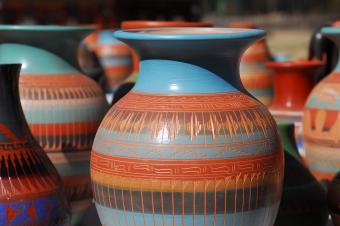
You may see intact Native American pottery, as well as fragments of shards of pottery that has broken. Look for clear indications that the pottery was made by human hands, including incisions and carving, stamped designs, and painting.
Native American Beads
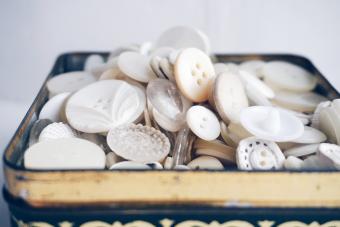
Beads and Native American jewelry were an important part of many ancient people's cultures. You can find Native American beading on clothing and textiles, as well as loose beads in a variety of materials. These include shell, stone, metal, bone, and wood. Beads came in all different shapes and sizes.

Metal American Indian Artifacts
Native American peoples used metal in a variety of ways. Although some metals corrode with time and exposure to the elements, there are surviving examples in copper, silver, gold, iron, and other metals. The types of metal objects include the following:
- Jewelry
- Tools like knives and chisels
- Spear points
- Beads
- Plates
- Ornaments for clothing and headdresses
Assessing Value of Native American Artifacts
Find the value of a Native American artifact is a complex endeavor. It involves establishing the authenticity of the item, dating it it to a specific period, assigning a tribe or people who produced it, and considering the condition and the market for the items.
Native American Artifact Appraisals
Because there are so many factors involved in assigning value to artifacts, it's a good idea to get a professional appraisal if you suspect you have something valuable. However, it's important to choose an appraiser who is qualified in Native American artifacts and art and who does not have a conflict of interest. If the appraiser is offering to buy the item being evaluated, this can present a conflict of interest. Here are some appraisers and authentication sites to consider:
- Native American Art Appraisals, Inc. - Offering a fully-accredited appraisal service with insurance values, IRS values, and more, this organization conducts in-person appraisals only.
- Indian Artifact Grading Authority - This organization provides certificates of authenticity and offers in-person and online appraisals. These are not insurance values.
- Elmore Art Appraisals - Specializing in Native American art and artifacts and fully certified, this appraiser works with museums and individuals and provides all types of appraisals.
- McAllister Fossum - Specializing in Native American artifacts of Alaska and the Northwest Coast, this firm is fully accredited and offers all types of appraisals.
Most Valuable Indian Artifacts Recently Sold
While many small stone tools sell for under $50 on auction sites, authenticated, valuable Indian artifacts can be worth much more. Here are some of the most valuable Native American artifacts that have sold on eBay:
- A carved stone effigy dating from 1000 BC to 400 BC sold for about $2,200 in 2020. It was fully authenticated.
- A six-inch-long authenticated Clovis stone point sold for about $1,750 in mid-2020.
- A butterfly banner dating to 4800 BC and fully authenticated sold for about $1,200.
Legality of Collecting Native American Artifacts
It's very important to note that there are legal restrictions on collecting and selling Native American artifacts. The Archaeological Resources Protection Act (ARPA) prohibits the removal of artifacts from Federal or tribal lands. If you find an artifact in a National Park, for instance, it is illegal for you to keep it in your private collection. In addition, the Native American Graves Protection and Repatriation Act (NAGPRA) protects objects and human remains associated with burials, as many Native American death rituals included burying important objects with tribal members. If you are buying or selling Native American artifacts, it's essential to ensure the object was not obtained in a way that violates these and other laws, even if that violation occurred in the past.

Where to See Indian Artifact Examples
Some of the most significant examples of Native American artifacts are displayed in museums around the country. These are a few of the places you can go to see great examples of Indian artifacts:
- Marin Museum of the American Indian in Novato, CA
- Mitchell Museum of the American Indian in the Chicago suburb of Evanston, IL
- National Museum of the American Indian includes sites in New York, Maryland, and Washington DC
- Wheelwright Museum of the American Indian in Santa Fe, NM
Rich Cultural Heritage
In addition to being a way to decorate with ethnic accents, Native American artifacts are representative of a rich cultural heritage. Finding them appropriately and treating them with the great respect they deserve is important if you hope to add some of these treasures to your collection.